










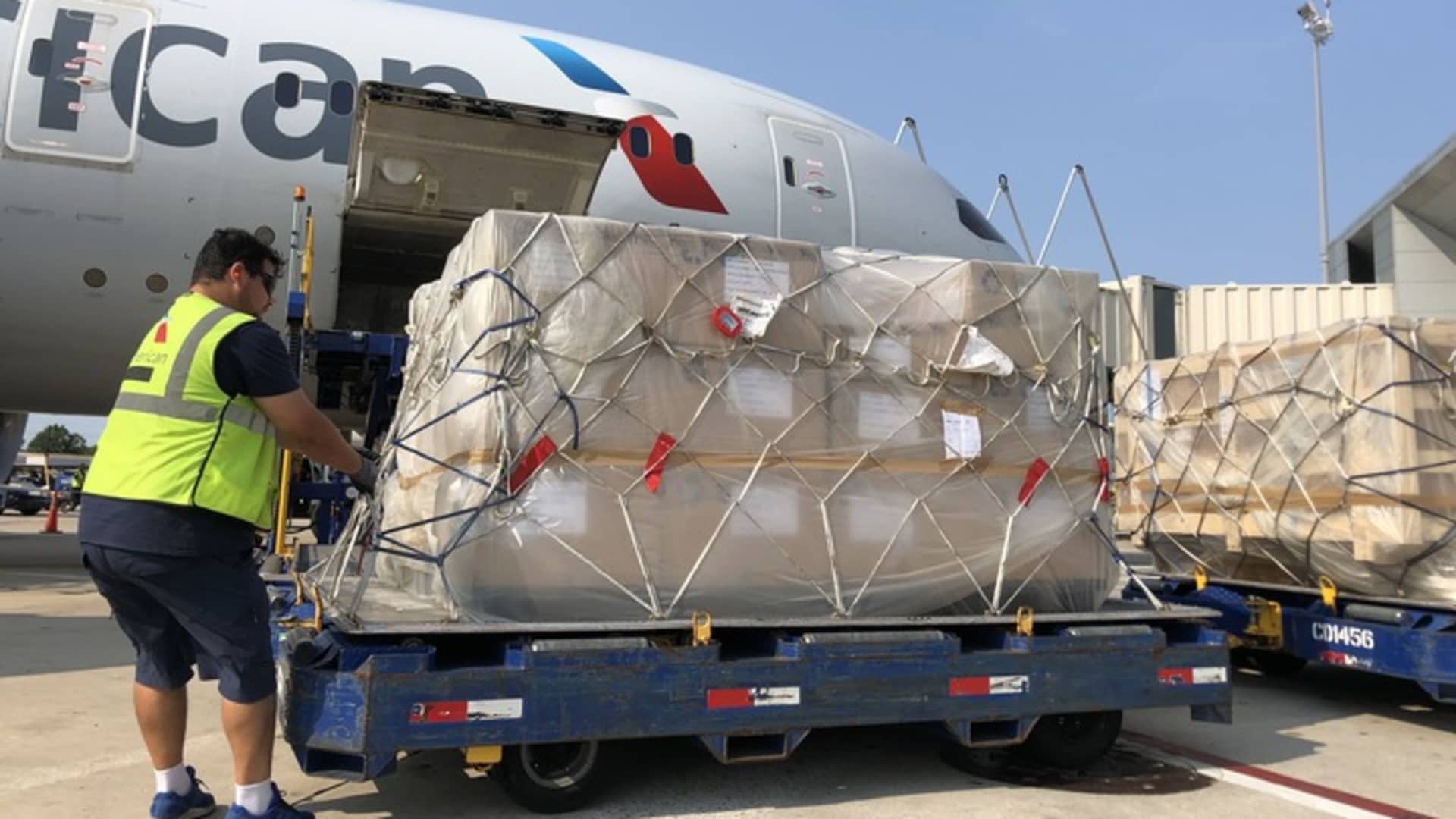
Africa emerged as the strongest-performing air cargo market globally in November 2025, recording a remarkable 15.6% year-on-year increase in demand, according to new data released by the International Air Transport Association (IATA). The surge, the highest of all regions, highlights the continent’s growing role in global supply chains, supported by rising trade activity and improved air connectivity. Cargo capacity among African airlines also expanded significantly, up 18.1% compared to the same period last year, reflecting carriers’ confidence in sustained demand.
Globally, air cargo demand maintained solid momentum, growing by 5.5% year-on-year, measured in cargo tonne-kilometers (CTK), with international operations rising by 6.9%. Overall capacity, measured in available cargo tonne-kilometers (ACTK), increased by 4.7%, while international capacity grew by 6.5%, indicating a broadly balanced market as 2025 drew to a close.
IATA Director General, Willie Walsh, attributed the resilient performance to shippers prioritising speed and reliability in the lead-up to the year-end holiday season. He noted that strong demand from emerging markets, alongside selective growth in the Middle East, more than offset softer conditions in the Americas, where trade patterns continue to adjust to changes in the United States tariff regime. Walsh added that the resilience seen in the fourth quarter positions the air cargo industry well as it enters the new year.
Across other regions, Asia-Pacific airlines recorded a robust 10.3% increase in air cargo demand in November, supported by an 8.4% rise in capacity. European carriers posted a 5.8% year-on-year growth in demand, with capacity up by 4.1%. Middle Eastern airlines also delivered strong results, with demand rising by 7.4%, although capacity growth of 11.0% outpaced demand.
In contrast, North American carriers experienced a 1.6% decline in air cargo demand, alongside a 2.3% reduction in capacity, reflecting ongoing market adjustments. Latin American and Caribbean airlines recorded the weakest regional performance, with demand falling by 4.8% year-on-year and capacity declining by 3.0%.
The broader operating environment remained mixed. Global goods trade expanded by 2% year-on-year in October, while manufacturing sentiment improved in November, with the global Purchasing Managers’ Index rising for the fourth consecutive month to 51.17. New export orders edged higher but remained below the expansion threshold, signalling continued caution amid tariff-related uncertainty. At the same time, jet fuel prices increased by 5.9% in November, driven by refinery disruptions, regulatory constraints in Europe, and limited spare refining capacity.
IATA noted that air freight volumes increased across all major trade corridors in November, underlining the strategic re-routing of trade flows and the growing importance of agile air cargo networks, with Africa increasingly positioned at the centre of this evolving global landscape.